
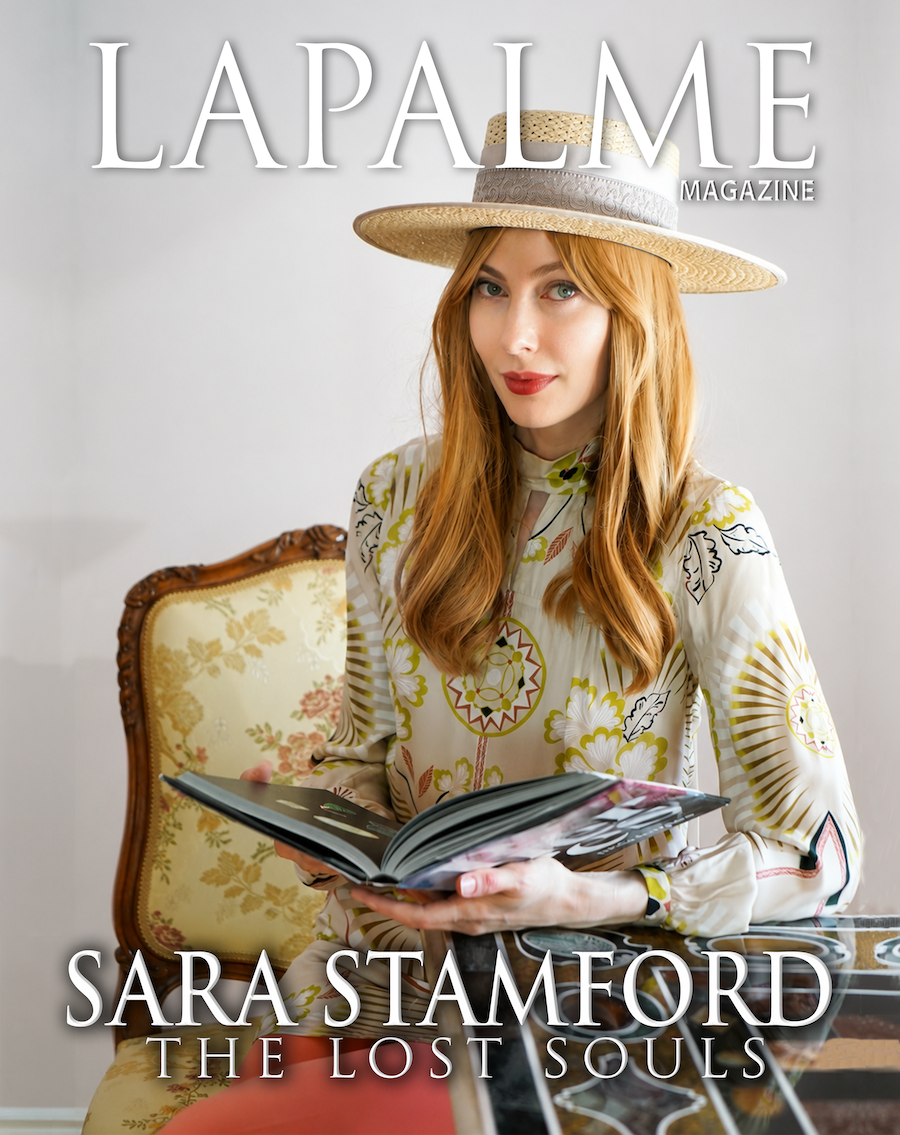
Sara Stamford knows what it’s like to live between worlds. Before she was a novelist, she was an international model, splitting her time between Paris and Los Angeles, and learning early on how much lives beneath a perfectly styled surface. That desire to peel back the layers of glamour became the foundation for her fiction. After her debut novel, The Honeycomb Diamond, Stamford returns with The Lost Souls, a story following one woman’s descent into the darker, more seductive side of Hollywood as she chases validation and loses herself along the way.
Stamford opens up about her years in fashion, her intuitive approach to writing, and what she hopes readers take from Elizabeth’s journey. The Lost Souls will be available in Digital and Audiobook formats on October 5th, with Hardcopies following on October 8th. Pre-order for digital is available now.
You’ve lived between continents, careers, and creative worlds. From modeling in Paris to writing novels in Los Angeles. How would you describe who you are today, at the intersection of all of that?
I’d say I’m a mix of all those different chapters of my life. Modeling in Paris taught me confidence, discipline, and how to understand people without needing words. Living between different countries and cultures made me curious and gave me so many different perspectives on people, relationships, their drives and their dreams.
Today, writing feels like a natural evolution of that. As a model, I was often helping tell someone else’s story through an image. As an author, I get to create the story myself. I can take everything I’ve observed and experienced over the years, the glamorous moments, the complicated ones, the funny ones, and the darker ones, and then turn them into characters and stories that live within the pages.
So I don’t really see modeling and writing as two separate worlds. They’re both creative, both about storytelling, and both very much a part of who I am today.
You’ve built a career writing character-driven fiction about secrets, self-image, and ambition. What first pulled you toward writing those particular themes?
I’ve always been fascinated by the difference between how people appear on the outside and what’s actually happening underneath. Coming from the modeling world, I was surrounded by beauty, glamour, perfect faces and meticulously styled magazine covers – but behind all of that, everyone still has insecurities, complicated relationships, addictions, struggles and more.
I love exploring that contrast in my characters. I’m interested in women who are ambitious and imperfect, who make questionable choices, reinvent and sometimes surprise even themselves. For me, that’s where the most interesting stories begin – when the perfect image starts to crack and you discover what’s really underneath.
Before your upcoming book, The Lost Souls, you made your fiction debut with The Honeycomb Diamond. Looking back, how did that first book shape you as an author?
Publishing my first book was a journey I truly enjoyed. It was both creatively fulfilling and personally transformative. It taught me to trust my instincts and not be afraid to create complicated characters. I also realized how much I love mixing contemporary women’s fiction with darker elements, such as secrets, suspense and the psychology behind people’s choices. I feel like I know my voice better now, but I’m still evolving, which is part of what makes writing so exciting.
The Lost Souls follows Elizabeth’s descent into the glittering, darker side of Hollywood. What first sparked this story for you?
I think fiction gives you the freedom to take feelings you’ve experienced or situations you’ve witnessed and transform them into something entirely new, creating characters and circumstances around them. Some of the characters are inspired by people I’ve met over the years, and a lot of the story comes from things I’ve experienced or seen myself. So while the book itself is fictional, there’s still a sense of truth behind the characters and what they go through. Writing The Lost Souls was definitely an emotional process, just because the theme is so human and relatable. When you’re exploring things like loneliness, friendship and betrayal, joy and deep sadness, it can be demanding, yet also satisfying because I touched on subjects that are often left unspoken.
The book explores how easily we can lose ourselves chasing validation. What do you hope readers take away from Elizabeth’s journey?
I hope readers see a little bit of themselves in Elizabeth, even if they don’t always agree with her choices. We all want to feel accepted, loved, successful, or like we belong somewhere, and sometimes that need can make us lose sight of who we really are. It’s important to stay grounded in who you are and not let the wrong people pull you down a darker path.
What does a real writing day look like for you? Are you a planner or do you follow the story where it leads?
I’m definitely more of an intuitive writer. I usually have a general idea of where the story is going and who my characters are, but I don’t plan every detail in advance. I like to leave room for the story to surprise me. I try to give myself at least half a day of uninterrupted writing time, meaning phone off, music off, and sometimes even lunch breaks are off, haha. Then the magic happens – a character takes me on a whole new journey, and I just follow along. For me, that spontaneity is one of the most exciting parts of writing, it’s almost like I’m discovering the story along with the reader.
Before you were an author, you were an international model. What was that chapter of your life actually like? Both the glamorous parts and the harder ones?
It was definitely an exciting part of my life. I got to travel, live in incredible cities, meet fascinating people, and be part of this very beautiful and creative world. But it could also be very challenging. Especially when you start at a very young age. You don’t really have a chance to build lasting friendships because you’re traveling all the time. And just when you connect with someone and become good friends, it’s like, “Okay, I’m leaving. See you who knows when or where!” Being away from your family and constantly surrounded by strangers can also take a toll on you, and that feeling of loneliness can be hard to shake. But at the same time, it teaches you to grow up much faster and become independent and strong. Without that chapter of my life, I wouldn’t be who I am today.
You’ve spoken about discovering emerging designers from smaller countries. What draws you to that kind of craftsmanship over the big houses?
I don’t think all the major fashion houses are doing that great right now. I do like that fashion has become more easygoing and that people are focusing more on comfort. But at the same time, so many of the major labels are starting to look alike. Before, you could glance at a piece of clothing and almost immediately guess the brand because each fashion house had such a distinct identity. Now, I honestly can’t always tell because they’ve become way too similar. And instead of discovering new talent and bringing fresh energy into a fashion house, they often hire designers from another major brand. I think that’s where creativity begins to mix together and individual identities begin to fade.
You split your time between Paris and Los Angeles. What’s a small, unglamorous ritual from your Paris life that you wish translated to L.A.,or vice versa?
One thing I really miss from Paris when I’m in L.A. is walking everywhere. I love just stepping outside, gazing at beautiful buildings, stopping at a little café, picking up a fresh baguette or flowers. Or simply sitting outside and people-watching for a while, gathering inspiration for my new book. I love that in Paris, so much of everyday life happens naturally as you walk from one place to another. In L.A., you get into your car and suddenly everything feels like a destination. Conversely, when I’m in Paris, I sometimes miss the openness of L.A., the tall palm trees, the sunshine, and having more space. I love that you can just drive to the ocean, and within minutes, you’re listening to the waves with the mountains in the background. I believe each city has its own kind of magic.
You’re vocal about mental health and women’s empowerment. How do you see fiction specifically as a tool for that advocacy?
Mental health affects all of us in different ways, and I think books can be such a powerful tool to explore feelings that aren’t easy to put into words or talk about openly. Through stories, we get to step into someone else’s world, see things from a different perspective, and sometimes even recognize parts of ourselves in the characters. I think that creates empathy and, more importantly, reminds us that we’re not alone in what we’re going through. Sometimes just knowing that someone else has felt something similar can be very comforting. If my writing helps even one person feel seen, heard, or understood, or simply gives them a little bit of hope, then I feel like I’ve done something meaningful.

- MEG FRASER – QUIET STRENGTH - October 9, 2026
- EMPOWERING THROUGH ALTERNATIVE HEALTH - October 4, 2026
- The Role She Never Auditioned For - October 4, 2026
