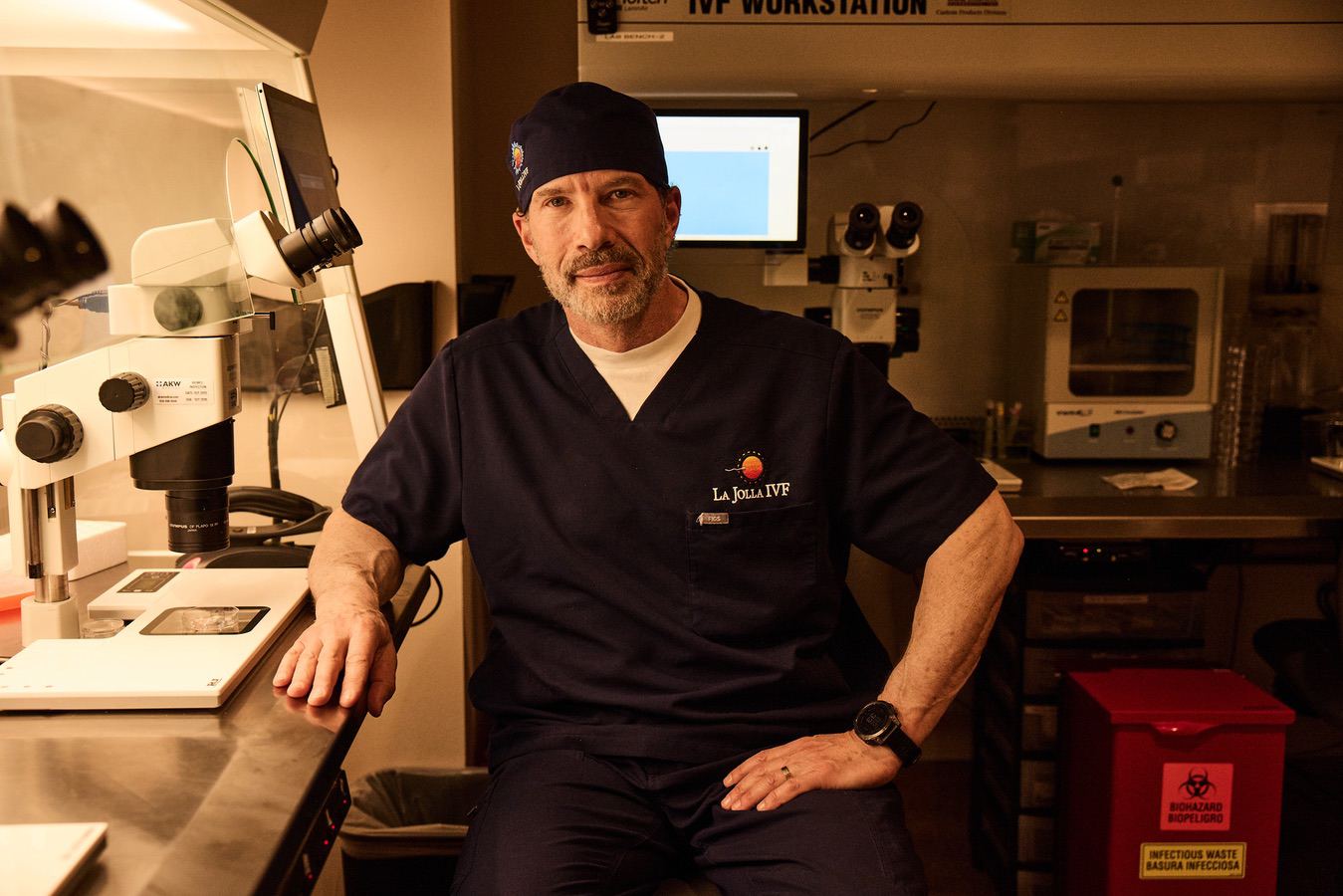
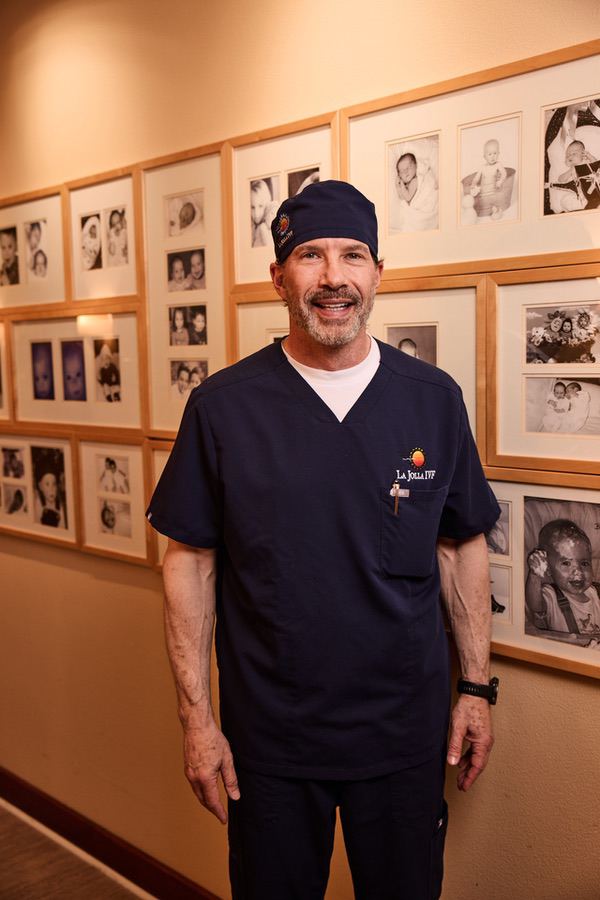
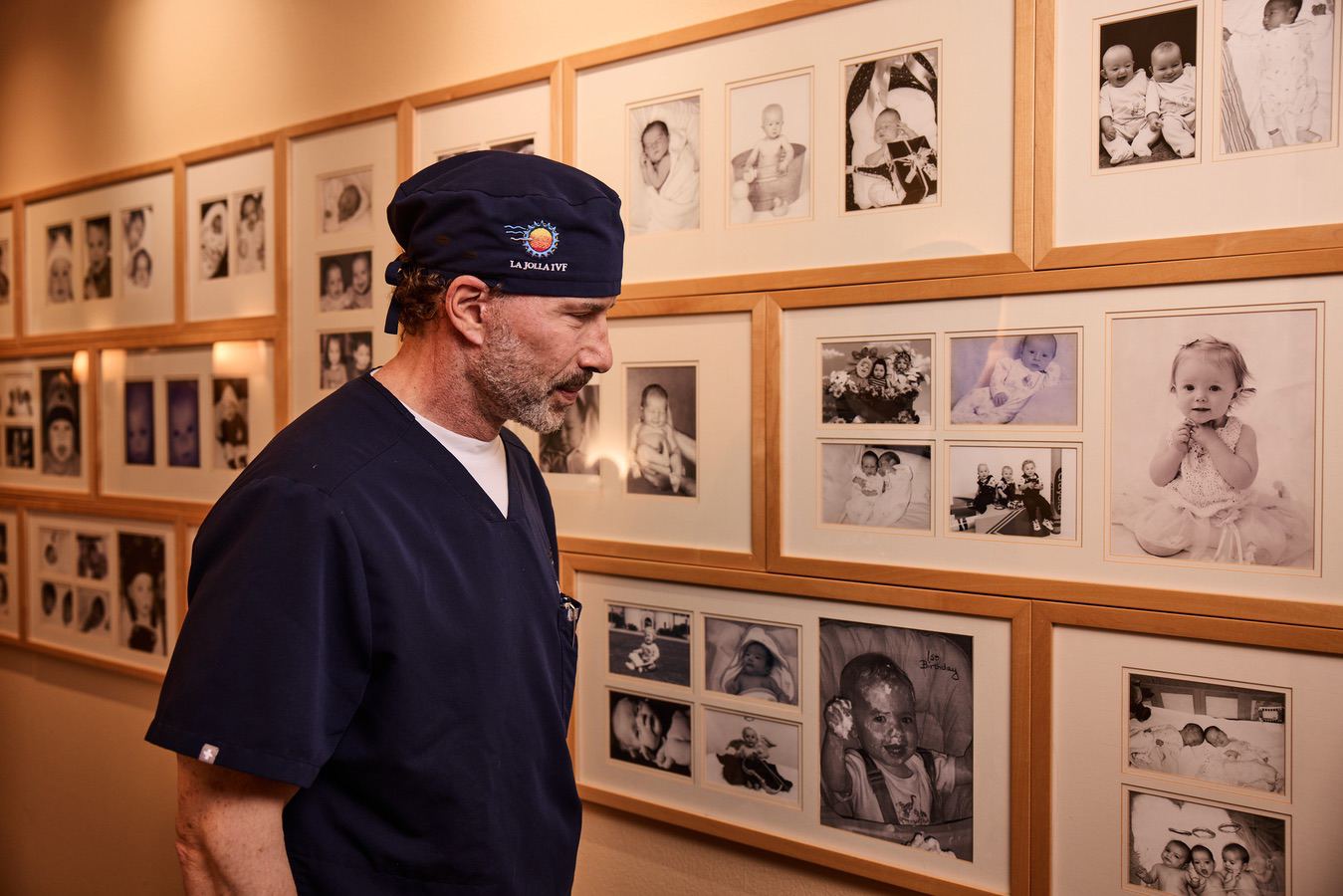
DR. DAVID SMOTRICH HAS SPENT 30 YEARS CHANGING WHAT’S POSSIBLE WITH IVF
From expanding access to fertility care to exploring AI and emerging reproductive technologies, Dr. David Smotrich reflects on three decades of helping more people find a path to parenthood.
Dr. David Smotrich, Founder and Medical Director of La Jolla IVF, has spent more than three decades helping people become parents. During that time, he has watched reproductive medicine transform, creating possibilities for patients and families that were difficult to imagine when IVF was still in its early years.
But behind the science is something much more personal: the desire to have a family.
Dr. Smotrich remembers watching that instinct emerge early in his own family. His daughter would grab her doll and pretend to be a mother while watching her own mother care for her younger sister.
“And I see it in my grandkids also that you see that this desire to be a mother is something that is ingrained or mimicked or something that they grew up watching and dreaming about,” he adds. “And so when we have to tell people that they have challenging situations, it’s quite devastating.”
Start with the right questions
For anyone beginning a fertility journey, Dr. Smotrich’s advice is straightforward: gather information, ask questions, and don’t make assumptions about where the problem lies.
“It’s not just a woman’s issue,” he says, noting that male factors play a role in about 40% of the cases he treats, while in some cases infertility involves both partners.
His advice is to approach the process with an open mind.
“There’s always hope. You have to start by gathering all the important information,” he says. “Go in with an open mind. Find somebody that you feel comfortable with, that you can talk to and tell all the stories.”
Expanding who fertility medicine can help
Over the course of Dr. Smotrich’s career, advances in reproductive medicine have done more than improve IVF. They have created paths to parenthood for people who once had far fewer options.
In 1997, Dr. Smotrich helped what he describes as the first male-male couple using an egg donor and gestational surrogate to have a child.
“We got eggs from an egg donor, sperm from one of the gentlemen, created an embryo, put it into a surrogate.”
Since that case, Dr. Smotrich says he has helped more than 2,000 male couples from around the world become parents. He also says he was among the first physicians to perform what is now known as reciprocal IVF for female same-sex couples, in which one partner provides the eggs and the other carries the pregnancy.
“When IVF was first starting out, it was never thought to expand like that,” he explains. “But I think that the newer technologies and the newer patients that we are seeing in the last all of 20, 25 years have really revolutionized the number of people that we’re able to help create families that never thought about, you know, being able to create a family before.”
That expansion reflects a much broader shift in reproductive medicine. As the technology has evolved, so has the range of patients who can consider fertility treatment as a path to parenthood.
Infertility can affect anyone
For many people, having children is something they expect will happen when the time is right. An infertility diagnosis can abruptly change that expectation.
“It’s something that affects people from all over the world: all religions, all socioeconomic areas,” Dr. Smotrich says.
The circumstances may differ from patient to patient, but the uncertainty is often similar: Why is this happening? What are my options? Is there still a path forward?
For Dr. Smotrich, answering those questions requires more than identifying the latest treatment or technology. It begins with understanding the individual patient.
Keeping fertility care personal
At La Jolla IVF, Dr. Smotrich has intentionally maintained a smaller practice where he can work directly with patients as they navigate treatment and the decisions surrounding it.
“I like to be individualized with every single patient,” he says. “It’s a very modest-sized practice. I’m the only doctor, but I work with everybody individually, and it’s very rewarding.”
That personal connection matters in a field where conversations can quickly become emotional and intensely private.
“I can’t imagine being in some of these huge places where you walk in and there’s 100 women waiting to be seen. It’s very, you know… angst-provoking.” He continues, “I want people to be at ease when they come to see us because the things that we’re talking about are very intense.”
Many patients arrive after months or years of trying to conceive. Some are accustomed to succeeding in nearly every other part of their lives through preparation, persistence, and hard work. Fertility can be different.
“They can be phenomenally successful in every other area that they have been,” he explains. “But in this area, nature frequently is very unforgiving.”
That unpredictability is one reason Dr. Smotrich believes patients need clear information and individualized support alongside medical treatment.
“There’s always hope,” he stresses.
Looking ahead: AI and emerging fertility treatments
After more than three decades in reproductive medicine, Dr. Smotrich is still looking toward what comes next.
One area of particular interest is artificial intelligence and how it might be meaningfully incorporated into fertility care.
“One of the major things that we’re now trying to incorporate is: how is AI going to be helpful and in what areas is it helpful?”
He is also encouraged by platelet-enhanced plasma therapy, an emerging treatment being studied for its potential to stimulate ovarian follicle development in women facing significant fertility challenges.
“We’ve been doing it for about a year and a half,” he notes. “I’m very excited about the potential.”
For Dr. Smotrich, these developments are part of a much larger evolution he has witnessed throughout his career. IVF has grown from a technology with comparatively limited applications into a field capable of helping an increasingly diverse range of people pursue parenthood.
Yet even as the technology becomes more sophisticated, his approach remains centered on the individual patient—their circumstances, their questions, and the family they are hoping to build.
After 30 years of change, the science continues to move forward. So do the possibilities.