
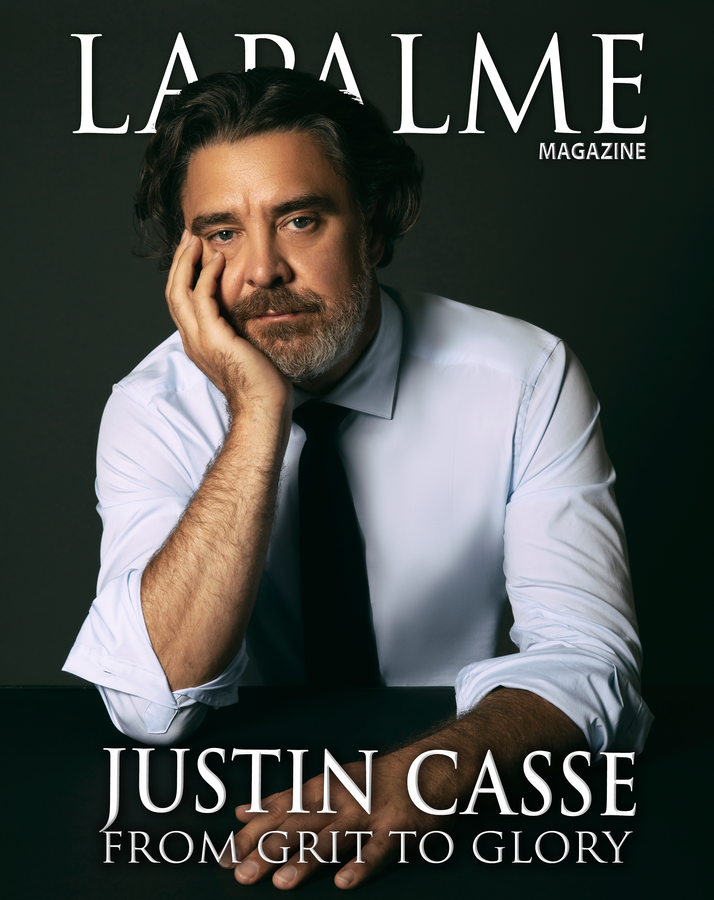
Justin Casse has spent nearly two decades mastering the multi-million-dollar world of thoroughbred racing. Born into one of the sport’s most storied dynasties, Casse built a career of his own based on knowledge, instinct, and respect. While spectators see the pageantry, few rarely gain access to the private, high-stakes world where instinct can outweigh analytics, major financial decisions are made in moments, and reputations are built on the rare ability to recognize greatness before anyone else does. Justin has spent his career at the center of that world. Dubbed a “Kingmaker” by those who know him best, we sat down with Justin to learn more about what it takes to overcome the impossible, and to gain insight into one of the world’s most glamorous sports.
What does a bloodstock agent in thoroughbred racing actually do, day to day?
A bloodstock agent acts as an advisor and business manager for horse owners and investors, essentially serving as a sports agent, high-end real estate broker, and financial advisor all rolled into one. On the market side, they manage the buying and selling of thoroughbreds, which includes finding horses in different price ranges, negotiating private sales, and bidding at public auctions. Beyond trade transactions, they act as matchmakers by analyzing family histories and pedigrees to recommend the best breeding combinations and understanding markets. They also manage the day-to-day communication, serving as the essential liaison between the horse’s owner and the hands-on caretakers like trainers, veterinarians, and stable staff. Ultimately, they evaluate health and athletic risks to protect their client’s money, handling the complex business side of the industry so investors can focus on the excitement of the sport. They are essentially the portfolio managers and strategic consultants of the horse racing and breeding industries.
What does it take to earn the trust of clients who are making multi-million-dollar decisions in a matter of moments?
What should earn the trust of clients is trust in that the agent you’re selecting has had enough experience in buying and selling horses to know which risks are worth taking and which aren’t. Every agent is going to have more successes than failures, and the key is to learn from those failures and do your best to avoid them going forward, much like life lessons. All too often you’ll see new money (new clients) enter the game who have chosen to deal with a smooth talking agent who knows all the right things to say and has particular connections to put him in the spot to meet with new clients. More often than not, these people have experience of spending other people’s money and not necessarily their own. In my opinion, the best judges of top-tier racehorses are the ones who’ve put their own skin in the game and seen the successes and failures.
You were born into one of racing’s most celebrated dynasties. What was it like carving out your own identity within that legacy?
At first I wanted to embrace the family’s knowledge and make the most of what they could provide, and then I reached a point where I wanted to spread my wings a bit and learn from those outside of the family. My family is very competitive, so this wasn’t initially well supported but proved to be one of the best decisions I’d make for my business. It allowed me to create new relationships and opportunities that wouldn’t have presented themselves if I didn’t go outside of my comfort zone. It ultimately led to me cultivating my business in Europe (and somewhat in South Africa and Australia). I had carved out a niche of doing business overseas that wasn’t as in fashion as it is today. It’s hard to disagree with family and try to move yourself out of the larger shadows of your predecessors, but I feel as though I’ve accomplished that.
What is a moment in your career thus far that you’re most proud of?
Over a longer term, successfully becoming my own individual, as mentioned in the previous response, is something that I am extremely proud of.
As far as a singular moment, the success of War of Will winning the Preakness Stakes in 2019 was a dream come true. I had purchased him on behalf of former client Gary Barber (former CEO of MGM Studios) from a sale in France when he was 2 years old. We shipped him back to America, where he had a tremendous career running and winning at the highest level on multiple surfaces. This ended up being a contributing factor to some of the market changes we’ve seen today in regard to more horses being purchased at auction abroad and shipped back to America.
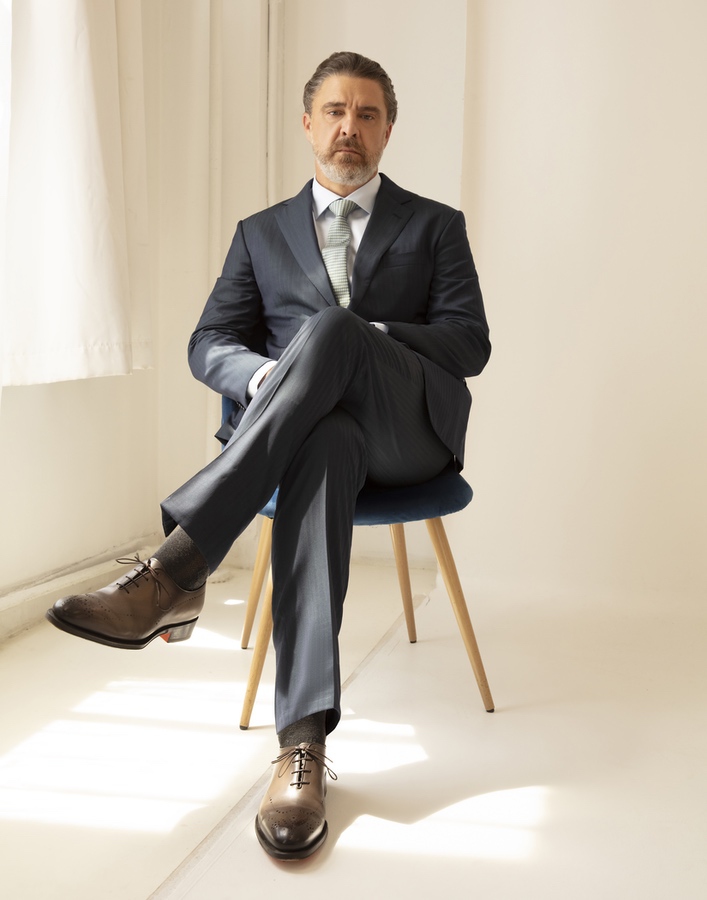
Racing is regarded as one of the world’s most elegant sports. Tell us a little bit about the attire and what is expected when attending a race.
For better or worse, I love fashion. I love shopping for clothes while traveling, particularly in Europe. I live in Louisville, Kentucky, so you aren’t going to find any Brioni suits available there! My attire varies greatly. If you are up early and at a farm or racetrack, you want to look smart casual with polo shirts and dressy boots. If you’re in Ireland, you’d better always have a rain jacket in the car. When going to the races, sometimes you’ll need a suit and tie, or you can get by with a blazer. Also, you can be dealing with 90°+ heat in Florida, New York or Kentucky but also 40° rain in Ireland, England or France, so a lot of money can be spent on your wardrobe for multiple occasions. This doesn’t include having to wear a morning suit, top hat and waistcoat for Royal Ascot or the Epsom Derby.
With 30 minutes between races, you’ll usually spend your time chatting about the upcoming or previously run race, figuring out your bets for the next race and enjoying some cocktail that could be a signature drink for the races or location. If you are lucky enough to own a runner in an upcoming race, you’ll want to go meet with the trainer and jockey of the horse and hear their tactics and see the horse before it heads out to the track. Your typical day at the races lasts between 5-6 hours.
Your profession has taken you to locations all over the globe. What are some of your favorite destinations?
Debatably the best part of my job is the traveling. It can feel like a traveling circus sometimes because many of the same industry players are going to the same locations. I am very fond of Deauville, France in Normandy. It’s a picturesque French town that is the closest beach to Paris by train. It is beautiful at any time of the year; however, Christmas time is lovely there. Cape Town, South Africa in our winter (their summer). Del Mar, California and Saratoga Springs, New York, in the summer. Lexington, Kentucky in the fall.
I spend approximately 3 months of the year in Europe, between Ireland, England, and France. Rural Ireland is amazing; it’s like stepping back in time, which can be quite refreshing. A lot of times I will try to coordinate one of these business trips with a vacation spot… this has included Fiji, Bali, Iceland and Morocco amongst others.
You’ve said instinct often outweighs analytics in this business. Can you describe a moment when your gut overruled the numbers?
I think the better way that I would like to describe this is that instinct comes from years of analytics that you are able to process very quickly given your experiences on the subject. The word intuition comes to mind, or going with your gut, but ultimately believe that’s your life’s work, acting almost like AI or ChatGPT to give you the answer very quickly.
When you think about things and evaluate things for too long, it may make you question this because you’re allowing for outliers, excuses, or arguments to take place, contradicting what your ‘gut’ tells you. It’s a fine line between going with your gut but also realizing you might be better suited to ask someone who knows more than you on a specific topic and dragging your decision out.
One of my biggest educations in life has been realizing that there are some people whose life’s work I have a huge admiration for, and in some instances I’m business partners or friends with them, who are not right all of the time. I was told by people I respect to not waste my time traveling to Europe on business, or one person, who has bought as many successful horses as anyone, told me eventuallyPreakness winner War of Will was a ‘bad horse’. I did those things anyway, and they were a couple of the best decisions I’d ever made that went against the advice of people I admire, and I still hold their opinions in high regard but also realize it is not possible to be right in this industry 100% of the time.
How has your eye for talent evolved over the course of your career?
What I look for in a horse has evolved through 2 main points: travel and failure.
I started evaluating horses as a late teenager with my family, and the type of horse we looked for then was based around the price we were willing to pay and the confirmation defects we learned to live with to make the horse a reasonable price. I have had to purchase my fair share of horses that did not work out for a number of reasons, with both my own money and my clients’ money. Nothing will educate you quicker than losing your own money.
Through traveling, I’ve looked at horses in Europe, Australia, South Africa, and obviously the USA. Different jurisdictions run some of their premier races at different distances, anywhere between ¾ of a mile to 2 miles. The way horses are built and the way they move when they walk, you can learn a lot about which physical type should thrive at a particular distance.
You’ve become an advocate for mental health in racing. What pushed you to speak openly about it?
I’d say it’s not just about being an advocate for mental health in racing but an advocate for mental health in general. I would probably say that mental health (and emotional well-being) is the most important type of health there is. That might not be a popular opinion, but if we are physically ill and mentally well, we have a shot and are motivated to get better physically. If we are physically well overall and mentally unwell, we struggle to maintain physical wellness.
I have spent a lot of time, money, and emotions looking after my well-being and learning about the factors in our upbringing and environment that contribute to our decision making on a daily basis. I feel useful when I can be of service to those who want help and need the answers that I took the time to educate myself on.
There are ups and downs in the horse racing world just like other businesses, I would assume, but we are dealing with animals that we can not entirely control how they act or react when changing environments, so much is out of our control. Expectations of winning and succeeding can be shattered dreams when a horse might get a fever or a bruise on the foot. So a horse worth substantial sums of money may devalue itself one day and can increase its value another; all of this can happen very quickly. This can be emotionally draining when you are dealing with it on a high level frequently.
The thoroughbred industry exists within a unique and often intense bubble — one built around extraordinary highs, crushing disappointments, immense financial pressures, and deeply personal emotional investment. The nature of the sport creates a constant cycle of anticipation, hope, validation, and heartbreak. A major victory can bring an unparalleled sense of accomplishment and euphoria, while a poor result, a failed investment, an injured horse, or an unexpected setback can create feelings of frustration, anxiety, and/or despair. These dramatic emotional swings can become a breeding ground for unhealthy coping mechanisms.
Within this environment, the pursuit of relief from stress can sometimes lead individuals toward addictive behaviors. These addictions are not limited to substances such as alcohol or narcotics; they can also manifest as process addictions — behaviors that provide temporary escape or a sense of control, including gambling, excessive work, compulsive spending, collecting, or other repetitive pursuits. The racing industry, with its demands, financial risks, and competitive pressures, can reinforce these patterns by providing endless opportunities to chase the next win, the next purchase, the next breakthrough, or the next moment of validation. All of which I have gotten caught up in.
Tell us about your commitment to aftercare, and what that looks like in practice. Why is this such a personal priority for you?
To me, being a responsible owner means protecting a horse’s well-being throughout its entire life, not just its racing career. I put this belief into immediate action with every purchase I make: a dedicated percentage of the buying price goes directly into certified lifelong aftercare programs. This structural funding ensures that when these remarkable thoroughbreds step off the track for the final time, they are guaranteed the comfortable, dignified, and safe retirement they have truly earned.
True horsemanship means caring for an athlete long after the finish line. Because a horse’s retirement matters just as much as its racing career, this financial commitment guarantees that our retired thoroughbreds live out the rest of their days with the safety, comfort, and dignity they deserve.
If you could give outsiders one honest, unfiltered look into this world, what would you want them to see?
That’s a tough one because there is so much to comprehend in the many facets of that world….
I suppose I’d show outsiders the raw reality of the horse racing world; I would want them to see the contrast between the 2 minutes of racing glamor and the 23 hours and 58 minutes of grueling, everyday grit.
I would want them to stand on the backstretch at 4:30 AM in the dead of winter, when the skin freezes, but the horses still need to be cared for because there are no holidays to them. I’d want them to see the steam rising off the horses after a workout, hear the rhythm of hooves in the morning fog, and see the faces of grooms who live in small rooms just steps from the stalls. People see the crisp white linen suits, the expensive hats, and the champagne toasts in the turf club on race day, which contrasts with the heartbeat of racing, which belongs to the collective army of hotwalkers, exercise riders, and blacksmiths who sacrifice sleep, family time, and their own bodies just to keep these incredible athletes sound and happy.
I would want outsiders to see that this entire multi-billion-dollar industry rests on a foundation of profound, mutual vulnerability. When you watch a trainer or an owner look at a horse, it isn’t just a business asset they are eyeing—The extreme highs of standing in the winner’s circle are intoxicating, but they are paid for in advance by months of exhausting labor and anxiety.
And of course all this starts the breeding of the horse…. the emotional and financial endurance the bloodstock world demands. It takes nearly three to four years of investment, daily physical labor, and intense care before a bred horse ever sets foot on a racetrack. During that long window, you live with the constant concern of something unforeseen happening that could instantly erase years of work. The prestige of producing a champion is an intoxicating dream, but the actual foundation of breeding is a relentless cycle of hope, hard work, and a respect for the horse. It is a world where you invest your heart and fortune into a future you cannot control, sustained by the rare, magical moment when everything aligns perfectly.
Photo Credit:
Photographer: Mike Ruiz
Groomer: Ryann Carter

- From Grit to Glory: Inside Justin Casse’s High-Stakes World - September 1, 2026
- Riz & Oriah Mirza: Modern Spirituality Experts on keeping it real, Their Sacred Earth Retreats, and the launch of Chakra Cozy Magazine - August 11, 2026
- Tyler Mane & Renae Geerlings Open about their new podcast MANE AF and the wake up call that shifted everything - August 6, 2026
