
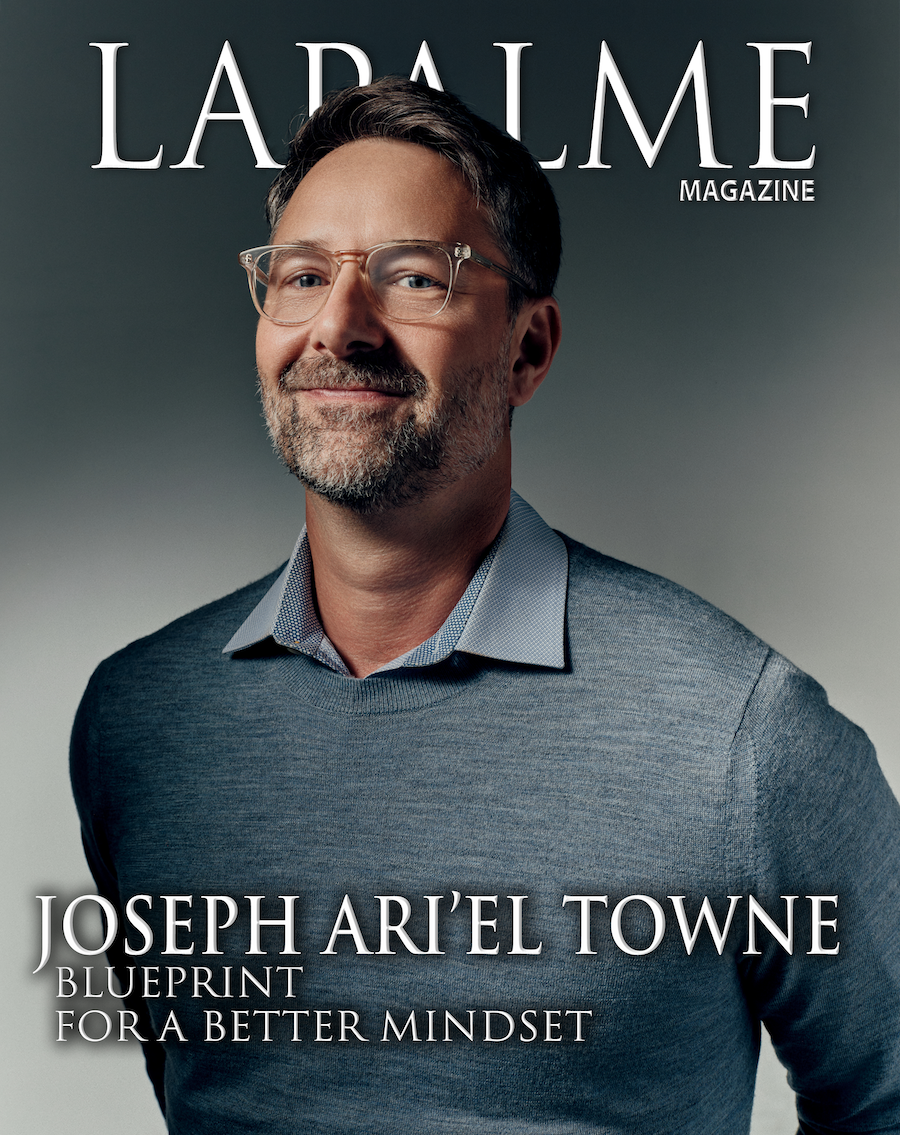
Joseph Ari’el Towne is a name known by many in Hollywood and throughout the world of sports for his success with helping countless individuals take their personal and professional lives to the next level. As a coach who has worked with Olympic athletes, Fortune 500 executives, celebrity actors, and broadcasters, his new book The Better Mindset (available September 29th on Amazon) outlines why “better,” is a direction, not a destination. We sat down with Towne to talk about why he believes most of what makes us inadequate is manufactured, why we hold the pen to the story we tell ourselves, and why he seeks to leave the world better than he found it.
Your book is built around the idea that ‘better’ is a direction rather than a destination. In a culture obsessed with achievement and milestones, why do you think we’ve become conditioned to believe fulfillment is something we eventually arrive at?
Achievement and Milestones are not necessarily bad things. It’s important that we are able to do what we set out to do, even if we don’t do it the first time out. When we hit these goalposts along the way, we build confidence because we now have some evidence that we are on the right track, and the progress we are making allows us to become more gritty. To allow us to persevere with passion over time.
The challenge is that we have a lot of ways in which we come to believe we are not enough. A lot of that is rooted in a paradigm in our culture that is obsessed with perfection. Perfection is an illusion that is like approaching infinity. It’s a place that we will never fully arrive. Even in those moments we say ‘That was perfect.’ or ‘This was a perfect moment.’ Okay, then what? Do we simply chase another ‘perfect’?
The same is true for fulfillment. I love feeling fulfilled. Filled with good food, good conversation. Filled with joy. Filled with peace. We can have that beautiful moment, but then the moment fades. Then what? Can we appreciate and be content for a moment instead of constantly chasing something up ahead? When we only chase what is up ahead, we constantly feel like what we have isn’t enough.
Speaking of not enough, a main goal of advertising is to show us what is missing from our lives and to share how their products will fill the gap. We receive these messages on a daily basis, and since that is the environment we are in, it makes its way into our consciousness, and then stories start to run in the background.
It takes mindset training to be able to become aware of what stories we are telling ourselves and then to remember that we hold the pen.
You’ve coached everyone from Olympic athletes and Fortune 500 executives to actors and sports broadcasters. Across those very different worlds, what have you found is the one mindset challenge nearly everyone shares?
That people wonder if they can trust themselves when it matters the most. Whether it is an athlete seeking to do something better than they have ever done it before. Or an actor telling a story better than it has ever been done before, there is a question people ask. It isn’t always in their conscious mind. But they wonder: can I actually do this?
The answer to this question is binary. Either it’s yes or it’s no.
A lot of this comes from our relationship to our edge of growth. We organize our thoughts, words, and actions to be able to move past our edge and learn along the way, or we stay in our zone of comfort.
Many people equate confidence with fearlessness, but you’ve spent decades helping high performers navigate pressure. What’s the biggest misconception people have about fear, and how can it actually become an advantage?
A common misconception is that confidence comes from past work. But you can experience doing incredible work and still beating yourself up inside, and that will not grow your confidence. Confidence comes from the combination of how you speak with yourself and finding evidence to back up the story you are communicating inside. Sometimes that comes in the form of the words you speak. Sometimes it is about the way your nervous system can receive the information.
Fear is a life-saving response. It isn’t always the enemy. But the things that saved us thousands of years ago may overreact to modern living. For example, having an uncomfortable conversation may feel the same way to us as running from a saber-tooth tiger. Unsafe!
What if we reframe fear of the future as having a healthy stress response? A stress response itself isn’t harmful. Kelly McGonigal, a Stanford professor, shared her research in her groundbreaking TED Talk “How to Make Stress Your Friend.” In it, she shows that it isn’t stress itself that harms us — it’s the way we interpret it. And the story we tell about stress lies within our own influence.
But discomfort is something we can first embrace and build a tolerance for and then actively seek out. Everything new we are seeking is outside of our comfort zones.
We can develop a relationship to exploring the unknown in a way that builds self-trust. We can learn that we will adjust to the challenges the moment brings forth and that we have what we need inside of us to handle it.
You write about the relationship between our environment and our mindset, drawing from Feng Shui and spatial synergy. For those unfamiliar with those concepts, how does the space we inhabit quietly shape the way we think, create, and perform?
Different cultures around the world study the effects that our environments have on our minds, our bodies, and our nervous systems. Modern neuroscience shows us that the shapes of rooms affect the way our brains work.
When we sit with our backs to things we can’t see, our fight or flight reflex gets activated. Our spaces are telling a story and they market to us on a regular basis. Most people’s spaces reflect their lives backward in time (where they have been, who they know, what they have accomplished.) In this sense, they become a museum to our past lives.
When people want something new to come into their lives, they can start acting as if the thing has already happened. They can become the person who can receive and handle the thing they seek. And this all starts with our space. We can set up our spaces to call forth the life we are stepping into. Every item placed with intention.
The stories we tell ourselves matter. The stories we tell ourselves are affected by the state of our mind, the state of our body, the state of our energy. The state we are in is influenced by the Spaces we occupy. Living environment. Work environment. The people we surround ourselves with and the things we put on our calendars.
Story comes from State. State comes from Space.
This is how Spatial Synergy works.
Hollywood is often viewed as an industry driven by comparison and external validation. After working within it for so many years, how do you help artists remain connected to their own purpose rather than chasing someone else’s definition of success?
Comparison is tempting. Whether that is to someone else, or whether it is a past version of ourselves. I’ve heard it said that comparison is both the thief of joy and that when we compare, we despair. It can only be useful in building a roadmap to our own futures. Where we are in relationship to where we seek to be. Everything else is noise.
External validation can feel good. When we are younger, we may need to borrow someone else’s belief in us. Eventually we have to take over the job.
External criticism may not feel good. If it is useful and constructive it can be. If it is hyperbolic and made to be about our identity and who we are, then it can be demoralizing.
There is a contagion in our society to prioritize other people’s thoughts about us over our own. We need to right-size when other people’s opinions are useful and start by checking inward to get the true signal of what matters first.
Purpose is primary. When we know the reason we do what we do: our core mission or philosophy, our vision of the future we are building — then we get to determine what success will look like for ourselves. This is soul work. It can be lonely. No one else can do it for us. It may not immediately make us money. But everything that matters flows from these things.
The Better Mindset encourages readers to develop a healthier relationship with themselves rather than simply becoming more productive. Why do you think that distinction is so important in today’s culture of constant optimization?
When we only prioritize people’s output, we are thinking of them like batteries. Is this really how we want to treat people over time? It’s incredibly transactional. I would rather be transformational in the precious time we have here.
Productivity or outcomes matter. But not at the expense of everything else. Sometimes the most important thing we can do is focus more on being than on doing. When things get out of balance, it’s likely we need more nervous system regulation, more active recovery and more celebrating. Doing things for their own sake without an agenda or focus on outcome. Be more to do more.
Optimization is an arc of becoming. It is not a constant. Consistency helps us grow. Always being switched on leads to burnout.
Your work spans coaching, acting, directing, writing, and podcasting. How has being a storyteller influenced the way you approach personal transformation, and conversely, how has coaching made you a better storyteller?
I see a story in everything. Art. Nature. A meal. A human in front of me. I have stories running inside of me all the time. Story is impacting the lens through which you see the world right now. In its simplest terms, we are all storytellers. Whatever our profession and whatever our ages. Story matters more than anything else. It starts with the stories we tell ourselves about ourselves. And then eventually we can become aware of the story of the moment we are in. What is the story of this conversation? What is the story of this dinner? What is the story of the game we are watching? Why do we care? The curiosity I have is how we can do things better than they have been done before. The people I get to coach teach me every week.
This comes from a coaching client this week where we identified some resistance: Story is the result of the tension of a paradox of seemingly opposite experiences and philosophies. Most of the time we want more of one and little to none of the other, but that’s not how life works. It’s the tension between where we are and where we are seeking to be that is where the story lives.
A story needs to name the contrast of the paradox, and bring us through the moments between here and there. Not in a linear path, but one with twists and turns and excitement. We may fear that all hope is lost just before a breakthrough and a gift.
Season two of The Better Mindset podcast brings together voices from sports, entertainment, and leadership. Have there been any conversations that fundamentally shifted your own perspective or challenged beliefs you once held?
I am constantly in awe of the people I get to connect with. Starting with their willingness to go for it in life and put their whole selves into what they are doing. I love learning about their successes but it’s their moments of extreme challenge where I learn how to be resilient when life knocks us to our knees. I appreciate learning the thinking behind how they adapted and adjusted to things that weren’t part of their plan.
My conversation with Naismith Hall of Fame photographer Andrew Bernstein about the Mamba Mentality helped me deepen my appreciation for what passion, curiosity, and conviction look like at the highest levels of sport. Hearing about everything from the huddles with Pat Riley to watching the greatest to ever play on a daily basis culminating into a mindset — the Mamba Mentality — and how Andrew was able to capture those moments visually.
Kobe committed to small improvements, rigorously over time. Starting from a young age and continuing through his entire career. The compounding interest of that consistency. Fueled by love for what he was doing and driven by a seemingly insatiable curiosity to learn.
It shifted for me the old way I had been approaching my life. Getting inspired and trying to do everything at once. In a day. Big swings. Big breakthroughs. And how that would lead to an unsustainable thump. Instead doing little things consistently over time and then learning about the Japanese philosophy of Kaizen.
If someone feels stuck—whether creatively, professionally, or personally—what’s the first shift in thinking you encourage before they begin making changes in their external circumstances?
When I think of stuck-ness, I immediately think that someone is trying to move and they are not able to. The first thing I would encourage them to do is pause and stop efforting in the ways that aren’t working for them. In the pause: to tune into what is going on inside them and become aware, through conversations or journaling or moving their bodies and paying attention to their thoughts. Awareness is the first unlock.
Secondly, a reframe: these moments of stuck-ness are an invitation. This is an oversimplification, but they are trying to do their way out of a situation, and very often we have to focus on being for a while. Being with our thoughts. Becoming aware of our story. Reconnecting to the vision of what matters. Rethinking our how. Taking small actions and learning from them until momentum starts to build.
All of this inner work is in the realm of BEING more instead of DOING more. If these two things (being & doing) are out of balance, we may feel stuck for a while.
Flow happens when we align with the principles of flow.
When readers close The Better Mindset, what do you hope stays with them long after they’ve finished the final chapter, and what would “living better” truly look like in everyday life?
That it doesn’t matter who you are, what you do, how old or young you are, Better is possible.
Being the best isn’t possible for everyone. But being Better is available to anyone.
Living Better for me comes down to a few things:
Leaving things Better than we find them. Getting a little bit Better every week. Becoming a fuller version of ourselves one step at a time. And vigorously pursuing a meaningful life.
In the words of head coach Pete Carroll it doesn’t matter how you started, it matters how you finish.
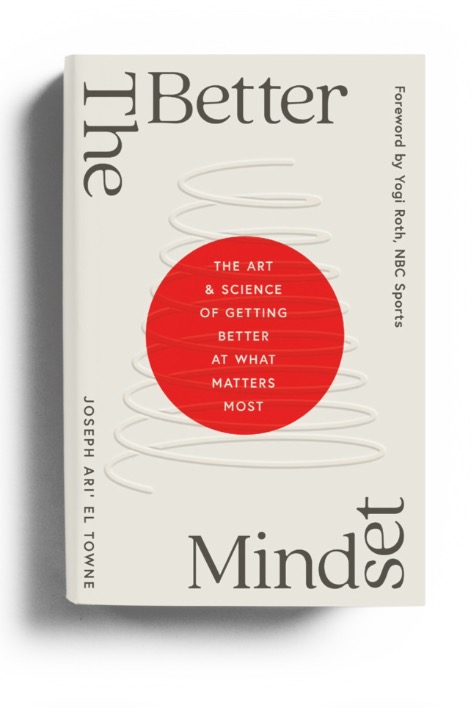
The Better Mindset (available September 29th on Amazon)
Link to pre-order The Better Mindset can be found here:
Photo credit:
Photographer: Storm Santos

- EMPOWERING THROUGH ALTERNATIVE HEALTH - October 4, 2026
- The Role She Never Auditioned For - October 4, 2026
- MALIBU FOOD & WINE OPENS WITH AN EXCLUSIVE EVENING HOSTED BY CHARLIZE THERON BENEFITING THE CHARLIZE THERON AFRICA OUTREACH PROJECT (CTAOP) - September 26, 2026
